
Why the Refurbished Electronics Market Is Growing Faster Than Ever
October 6, 2026 · Andreas Leptourgos
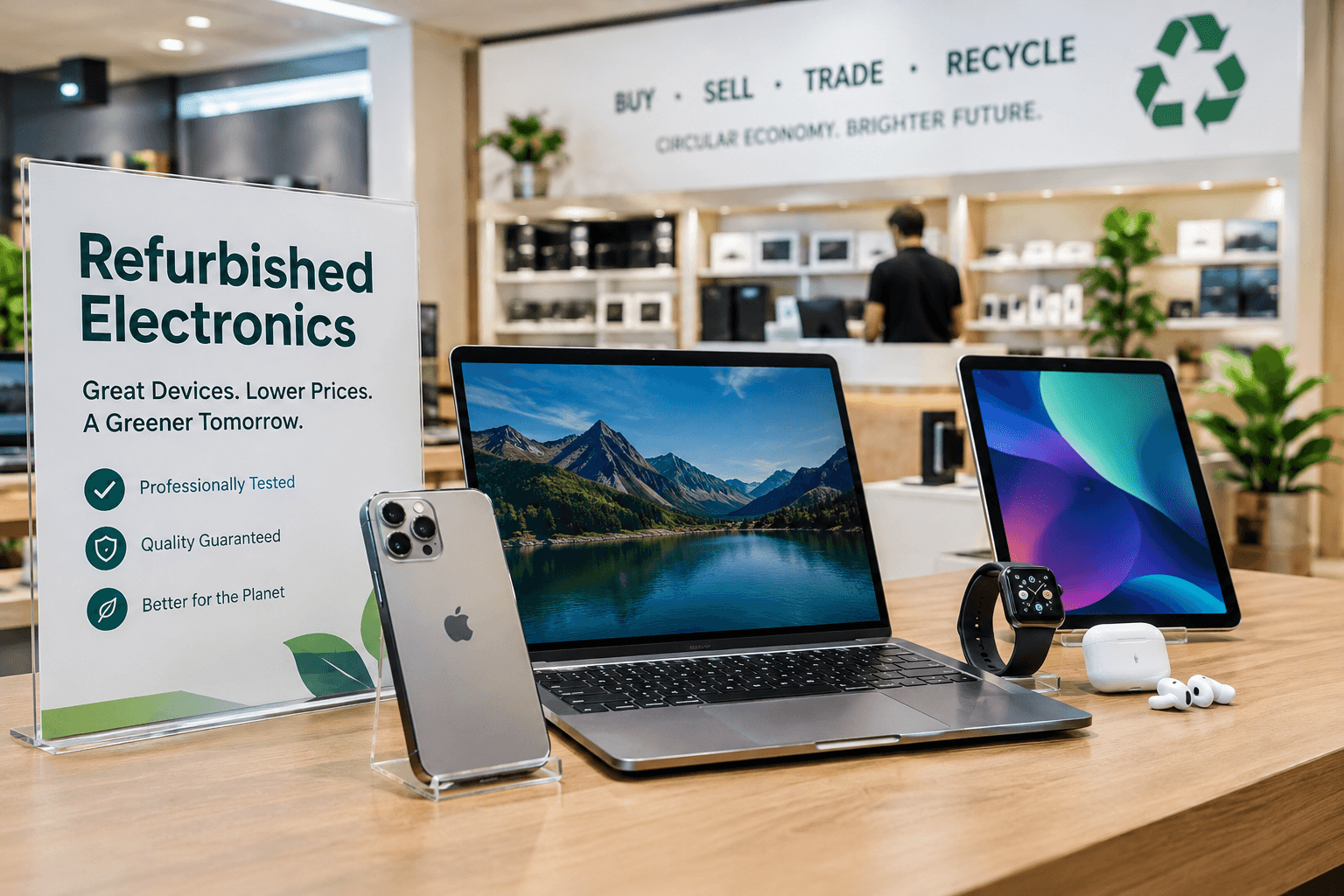
The refurbished electronics market is expanding because new devices cost more, buyers trust professionally tested devices more than they used to, and trade-in programs are putting more used devices back into resale. Growth varies by region and device type, and it faces real supply and pricing challenges.
How Big Is the Refurbished Electronics Market?
BuyBackX Franchising cites a global refurbished electronics market above $300 billion by 2030, with estimated annual growth of 10% to 15% and 75% of consumers open to buying refurbished devices. These are company estimates, not an independent forecast.
Independent data shows a more measured picture. Counterpoint Research reported that global refurbished smartphone sales rose just 3% year over year in H1 2025, as supply constraints, price uncertainty, and regulation held back mature markets. Emerging markets grew 4%, versus 1% in mature markets.
The takeaway is that demand is strong and durable, but the pace depends on how many quality used devices reach the market. That is why trade-ins and buybacks matter so much.
Why Are More People Buying Refurbished Electronics?
The main reason is price. A refurbished iPhone, Samsung smartphone, MacBook, iPad, laptop, or gaming console gives buyers familiar technology for less than retail. This matters most when a household is replacing several devices, buying for students, or equipping a small business.
The second reason is confidence. Professional refurbishers now use:
Device grading and functionality testing
Certified data wiping
IMEI checks for lost, stolen, or blacklisted devices
Battery assessments
Warranties and return policies
For example, BuyBackX Certified Pre-Owned devices come with a 12-month limited warranty and a 30-day return policy. Buyers are no longer gambling on an unknown device from a stranger. They are buying from a business that has inspected and prepared it.
Why Are Consumers Selling and Trading In More Devices?
Refurbished supply depends on people selling their old devices. According to Counterpoint's research, one in three US iPhone users traded in or sold their previous iPhone before buying a new one.
Trade-in programs make this easy. Instead of leaving an old phone in a drawer, a customer can get an instant quote, sell the device, and send it back into the technology lifecycle. BuyBackX estimates there is more than $200 billion worth of unused electronics sitting in homes, which is a large pool of potential inventory.
What Is the Difference Between Used and Refurbished Electronics?
Used | Refurbished | Certified Pre-Owned | |
Previous owner | Yes | Yes | Yes |
Professional testing | Not guaranteed | Usually | Standardized |
Data wiped | Depends on seller | Usually | Certified wipe |
Warranty | Rarely | Varies | Included (BuyBackX: 12 months) |
Returns | Rarely | Varies | Included (BuyBackX: 30 days) |
A used device simply had a previous owner. A refurbished device has typically been inspected, tested, cleaned, repaired, or graded before resale. Processes vary by seller, so always check the specific testing, grading, and warranty terms.
How Does Electronics Recommerce Support the Circular Economy?
The traditional electronics lifecycle is Manufacture → Buy → Use → Discard. Recommerce adds steps: Manufacture → Buy → Use → Trade In → Test → Refurbish → Resell → Reuse.
The goal is to keep devices and their components in use longer. This matters because the ITU and UNITAR reported that the world generated 62 million tonnes of e-waste in 2022, with only 22.3% documented as formally collected and recycled. The Global E-waste Monitor projects generation could reach 82 million tonnes by 2030.
Reuse is not the same as recycling, but a device that can be safely refurbished doesn't need to enter the recycling stream right away. The overall environmental benefit depends on repair quality, transportation, and eventual recycling.
Is the Market Only About Smartphones?
No. Smartphones lead, but the secondary market also includes:
iPhones and Android phones
iPads and tablets
MacBooks, Windows laptops, and desktops
Smartwatches
Gaming consoles
Headphones, earbuds, and speakers
Cameras and other consumer electronics
As more categories become expensive to replace, repair, refurbishment, and resale expand with them.
How Does Technology Make Buying and Selling Easier?
Automated pricing systems evaluate model, storage, condition, and market demand to produce instant quotes. Online inventory lets buyers search without visiting a store first.
BuyBackX combines both approaches. Customers can sell online or visit a store for an immediate quote and payment in cash, store credit, PayPal, Venmo, or digital gift cards. The company says about 80% of revenue comes from online sales, while stores provide the in-person experience.
Why Is Trust So Important in Refurbished Electronics?
Trust separates professional recommerce from informal second-hand selling. Buyers want to know:
Does it work properly, and has it been tested?
Is it locked or blacklisted?
Has personal data been removed?
What condition is it really in?
Is there a warranty and a return policy?
Are accessories included?
Is the price fair?
Sellers who answer these questions clearly make refurbished technology easier to buy, especially for higher-value devices like iPhones, MacBooks, premium Android phones, and consoles.
What Challenges Does the Market Face?
Growth is not guaranteed. The main challenges are:
Supply constraints: there are not always enough quality used devices at the right price.
Tariffs and pricing swings: these can squeeze margins.
Regulation: rules around secondary markets are tightening in some regions.
Quality variation: battery health and cosmetic condition must be tested and graded consistently.
Consumer skepticism: clear grading, warranties, and return policies are the best answer.
What Should You Check Before Buying Refurbished Electronics?
Device condition: look for a clear grading system.
Functionality testing: confirm the device has been tested.
Battery health: ask about it where relevant.
Data security: confirm previous data was removed.
IMEI or serial check: make sure it isn't reported lost, stolen, or blocked.
Warranty: check the length and what it covers.
Returns: understand the return window before you buy.
Accessories: confirm what's included.
Seller reputation: choose a business with an established track record.
Ready to shop or sell? Browse Certified Pre-Owned devices or get an instant quote.
What Does This Market Mean for Franchise Owners?
A tech buyback franchise can generate revenue from device buybacks, certified pre-owned sales, trade-ins, and online transactions. BuyBackX has built its franchise around this model, combining physical stores with an online sales channel.
Key terms published on the BuyBackX franchise site:
Estimated initial investment: $126,800 to $301,000, including the franchise fee
Franchise fee: $30,000
Royalty: the greater of 5% of gross sales or $1,000 per month, plus marketing and technology fees
Results vary by location, operations, inventory, and local market conditions, and BuyBackX does not make representations about future franchisee performance. Review the full details, including Item 19, in the Franchise Disclosure Document.
Download the FDD | See available markets
This is not an offer to sell a franchise. Franchise offerings are made only by Franchise Disclosure Document in states where registered.
The Bottom Line
Three forces are driving the refurbished electronics market: consumers wanting lower prices, better systems for buying and selling used devices, and the need to extend the life of electronics. Professional buyback, certified pre-owned sales, trade-ins, and online resale are becoming connected parts of one market. That gives consumers more options and businesses more ways to participate, though success depends on supply, quality control, and execution.
Frequently Asked Questions
What is the refurbished electronics market?
It is the secondary market for previously owned electronics that are inspected, tested, repaired, graded, or otherwise prepared for resale, including smartphones, laptops, tablets, consoles, and smartwatches.
Why is the refurbished electronics market growing?
Refurbished devices cost less than new ones, buyers are more comfortable with certified pre-owned technology, and trade-in programs make it easier to return old devices to the resale market.
Is buying refurbished electronics safe?
It can be, especially from an established seller that provides testing, data wiping, clear grades, a warranty, and returns. Always check these details before buying.
What is electronics recommerce?
It is the process of buying, selling, trading, refurbishing, and reselling previously owned electronics. It supports the circular economy by keeping products in use longer.
How does a device become refurbished?
It typically goes through inspection, functionality testing, data wiping, cleaning, repair, grading, and quality control. The exact process varies by seller.
Is refurbished the same as used?
No. Used means previously owned. Refurbished generally means the device has been tested and prepared for resale.
Is refurbished electronics good for the environment?
Reuse can extend device life and reduce usable devices entering the waste stream. The full impact depends on repair, transportation, and eventual recycling.
How big could the refurbished electronics market become?
BuyBackX cites a projection above $300 billion by 2030, with 10% to 15% annual growth. This is a company estimate, not an independent forecast.
How much does a BuyBackX franchise cost?
The estimated initial investment is $126,800 to $301,000, including a $30,000 franchise fee. See the FDD for full details.